
Look, you could have the perfect skills assessment. You could have a spouse who is an Australian citizen. You could tick every single box on the checklist. And the Department can still refuse your visa because of something you did fifteen years ago.
That is the reality of the character test. And it catches people off guard every single day.
As immigration lawyers in Melbourne, we see applicants pour months of effort into proving their skills or documenting their relationship. Then they treat the character requirement like an afterthought. A box to tick. A form to fill out.
It is not a box to tick. It is a gatekeeper. And the government has made that gatekeeper more powerful than ever.
Section 501: The Power to Say No
The character test lives in Section 501 of the Migration Act 1958. This is the provision that gives the Minister and their delegates the authority to refuse or cancel your visa if they decide you are a risk to the Australian community.
Here is what triggers a failure:
• A substantial criminal record: This means 12 months or more of imprisonment. One sentence of 12 months. Multiple shorter sentences that add up to 12 months. Even a suspended sentence where you never spent a day in a cell. It all counts.
• Criminal associations: You do not need a conviction. If you are associated with outlaw motorcycle gangs, organised crime groups, or individuals suspected of criminal conduct, that association alone can sink your application.
• General conduct: The Department looks at your life broadly. If your behaviour, past or present, suggests you are not of good character, your visa is at risk.
This is not about what you have been convicted of. It is about what the Department believes you might do. If you are facing a Section 501 character matter, understanding these triggers is the first step.
The 2026 Reforms Changed Everything
The rules shifted significantly in 2026. Following a rise in social discord, the government introduced pre-emptive powers to refuse or cancel visas based on hate-motivated conduct and extremism.
What does that mean for you?
You can now fail the character test for making public statements that incite racial hatred. You can fail for being involved with prohibited hate groups. And here is the critical part: you do not need a criminal conviction. The conduct itself is enough.
This is not theoretical. The Department is actively using these powers. Social media posts, public speeches, membership in certain organisations. All of it is now on the table.
Ministerial Direction 110: Safety Comes First
When decision-makers assess your case, they follow Ministerial Direction 110. This directive establishes a clear hierarchy of considerations.
At the top: protection of the Australian community. That is the paramount consideration. It usually outweighs everything else.
But the Department must also weigh:
• Whether your conduct involved family violence. There is now a zero-tolerance approach to this.
• The best interests of minor children in Australia who might be affected by the decision.
• Your ties to Australia, though these carry less weight now in cases involving serious offending.
If you have children here, if you have been in Australia for decades, those factors matter. But they do not automatically save you. Not anymore.
Police Certificates: Get the Right One
Proving your character requires documentation. If you are 17 or older, you must provide police certificates for every country where you have spent a total of 12 months or more over the last 10 years.
Here is where people make costly mistakes.
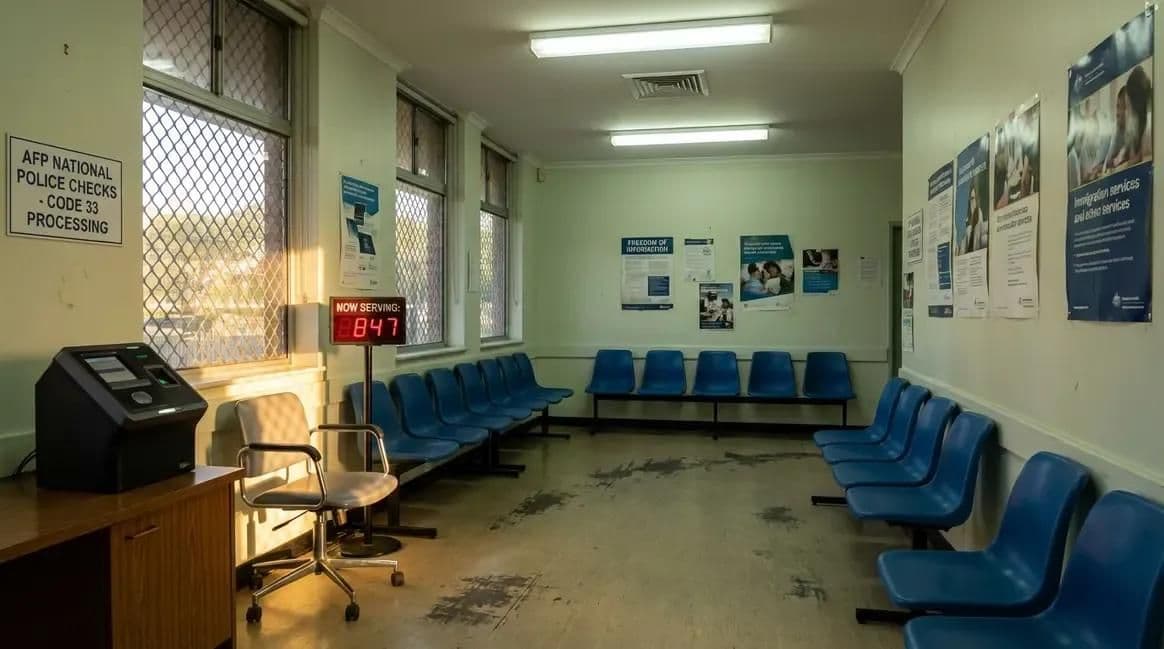
The Department only accepts an AFP National Police Check using Code 33. State or territory-issued police checks will be rejected. Wrong code, rejected. The processing time wasted, the application delayed, sometimes for months.
If you are applying for a skilled visa or any other pathway, get this right the first time. Code 33. AFP National Police Check. No exceptions.
The Danger of the White Lie
This is where I have seen people destroy their own cases.
Under Public Interest Criterion 4020, providing false or misleading information is a separate ground for visa refusal. This includes omitting information. That minor conviction from twenty years ago that you thought was spent and forgotten? If you leave it off your application, you have just given the Department a reason to refuse you.
And the consequences are severe. A three-year ban on applying for any Australian visa. In some cases, a ten-year ban.
The Department has sophisticated intelligence-sharing agreements with foreign governments. They will find out. The question is whether they find out from you or from their own inquiries. Honesty is not just the best policy here. It is the only viable one.
What Should You Do Now
If you have anything in your past that might raise a red flag, do not hope it will not be noticed. Do not assume it is too old to matter. Do not try to manage this yourself.
The character test has real teeth. And the reforms have made those teeth sharper.
We handle visa refusals and AAT appeals regularly. We prepare detailed character submissions. We know what the Department is looking for and how to present your case in the strongest possible light.
If you are concerned about how your past might affect your application, book a free consultation with our immigration lawyers today. Let us work out exactly where you stand before the Department makes that decision for you.
This article provides general information only and does not constitute legal advice. For advice on your specific circumstances, book a consultation.